
All Of Us Murderers and a Gothic primer
My forthcoming novel All Of Us Murderers is a Gothic novel. What sort of Gothic? You may well ask, because the Gothic novel has come in several distinct waves over the years. Here follows a quick and dirty overview of some aspects of the evolution of the Gothic, the examples all being novels from which I drew my inspiration. Read this lot and either you will have a 101 grounding in the history and development of the primarily British Gothic up to 1980, or you'll find yourself in a low-cut nightie, gibbering about something nasty in the woodshed. One of the two.
I make no apology whatsoever for the covers I have selected to illustrate this post.
The Georgian Gothic: The Castle of Otranto by Horace Walpole (1764)
The first book to be labelled a Gothic novel (the author originally presented it as 'a Gothic story', meaning generically medieval, barbaric, and somewhat foreign, and claimed it was the translation of an old manuscript). It contains a staggering number of what became the key genre tropes. The sinister house! The evil aristocrat! The murderous landscape! The much-pursued innocent girl! The sexual transgression! The ominous ghosts, curses, and prophecies! It starts with a giant helmet falling from the sky to crush a young man on his wedding day, and gets weirder from there. Still remarkably readable, if a bit lachrymose.
The Female Gothic:The Mysteries of Udolpho by Ann Radcliffe (1794)
Women writers took the Gothic, with its focus on the persecuted heroine, brooding aristos in castles, and sexual/supernatural danger in a capital-R Romantic setting, and ran with it. The queen of them all was Mrs. Radcliffe. Classic elements here include the scary castle, the supernatural and human terrors, the persecuted heroine being forced into an unwanted marriage, and the brooding, haughty villain who wipes the frankly bland hero off the page.
The Ghastly Gothic: The Monk by Matthew Lewis (1796)
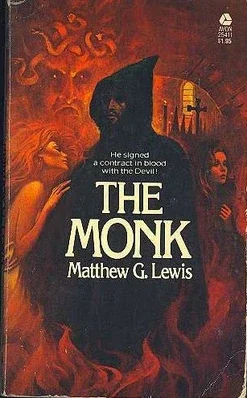
While writers like Mrs. Radcliffe were delving into the emotional turmoil and profound personal distress caused by, you know, being locked in a dank dungeon by a brooding nutcase, others were maxing out on the body horror. The Monk is proper nightmare fuel that still has the power to thoroughly disturb readers. It goes heavy on another classic-trope-to-be, that of warped religion, presenting a Catholic monk who becomes a monster when he gives in to his unholy lust, and moves seamlessly into Satanism. Includes surprisingly explicit devil-worship, rape, incest, torture, murder, illicit sex, torture, nightmarish imprisonment, hideous slow death, and horrifying child loss, all of it depicted in loving detail. There was a huge outcry of shock and dismay at the time of its publication. It sold like hot cakes.
The Grimy Gothic: The String of Pearls, Anon (1846)
The Victorians turned the Gothic into the penny dreadful: cheap trashy sordid pulp serials with violence, murder, sex, and corruption, with the horrors firmly located at home. We love to see it. The String of Pearls is the genre classic that put Sweeney Todd on paper and it locates the Gothic firmly in lunatic asylums and filthy London streets. The stock threatened-innocent-girl here cross-dresses to save her lover and defeat the ogreish villain; there is also a classic untrustworthy older woman who collaborates with male brutality for her own advantage. (Mrs. Lovett of human-meat-pie fame is a direct descendant of the scheming aunt in The Mysteries of Udolpho.)
The Domestic Gothic: Jane Eyre by Charlotte Brontë (1847)
No matter how big the Gothic mansion, ultimately it’s a genre of stifling domestic nightmare. The house is full of dangers, largely coming from your own family/spouse (and you can’t run away because the outside is also terrifying). Jane Eyre and Great Expectations (Charles Dickens, 1861) both lean into the lone virtuous innocent struggling through a maze of oppression and dark secrets. Notably the first of these gave us the ‘madwoman in the attic’ trope, and the second the unbeatable image of the dried-up wedding feast covered in spiders as a metaphor for warped and poisoned sexuality.
The Imperial Gothic: The Beetle by Richard Marsh (1897)
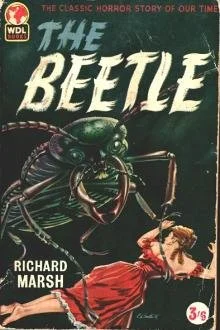
One of the things about slowly collapsing empires is that the people who benefit from said empire (here, white British cishet Christian men) get really upset, and then some of them write Gothic novels about it, which is I suppose better than starting a Make Britain Imperial Again movement with stupid hats. Published in the same year as Dracula and more popular at the time, The Beetle is a wild ride through the author’s, uh, ‘legitimate concerns’. The Egyptian villain? thing? person? god? at its centre is deeply sexually/gender ambiguous and the book is a nightmare about homosexuality, the rise of the East, the New Woman, the urban poor, foreigners, and other such existential threats to the British Empire. A sweaty, hallucinatory, sex-reeking fever-dream of a book that tells you what made the stiff upper lips tremble in private. Ending is a bit crap, though. Also, I should probably admit that cover has nothing (zero, 0) to do with the events of the book.
The Gothic Romance (In The Modern Sense): Rebecca by Daphne du Maurier (1938)
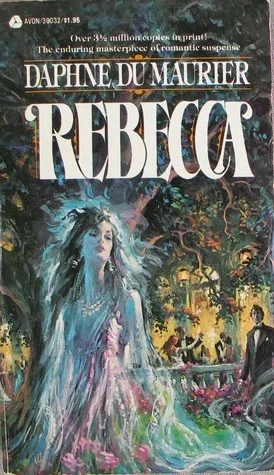
The foundational text here, largely because du Maurier takes the brooding and emotionally damaged scary owner of the scary house, and makes him the romantic lead. Finally. (Yes I know he’s a descendant of Mr. Rochester, but Jane Eyre is by definition Jane’s story so I do not accept it as a Gothic romance in the modern sense.) Scowling Byronic men run riot over the Gothic romance from here on in. Also running (from big houses on pulp front covers throughout the 1960s, 70s, and 80s) are ten thousand terrified young women, mostly in low-cut nighties. Barbara Michaels is a great author for later Gothic romances.
The Queer Gothic: Gaywyck by Vincent Virga (1980)
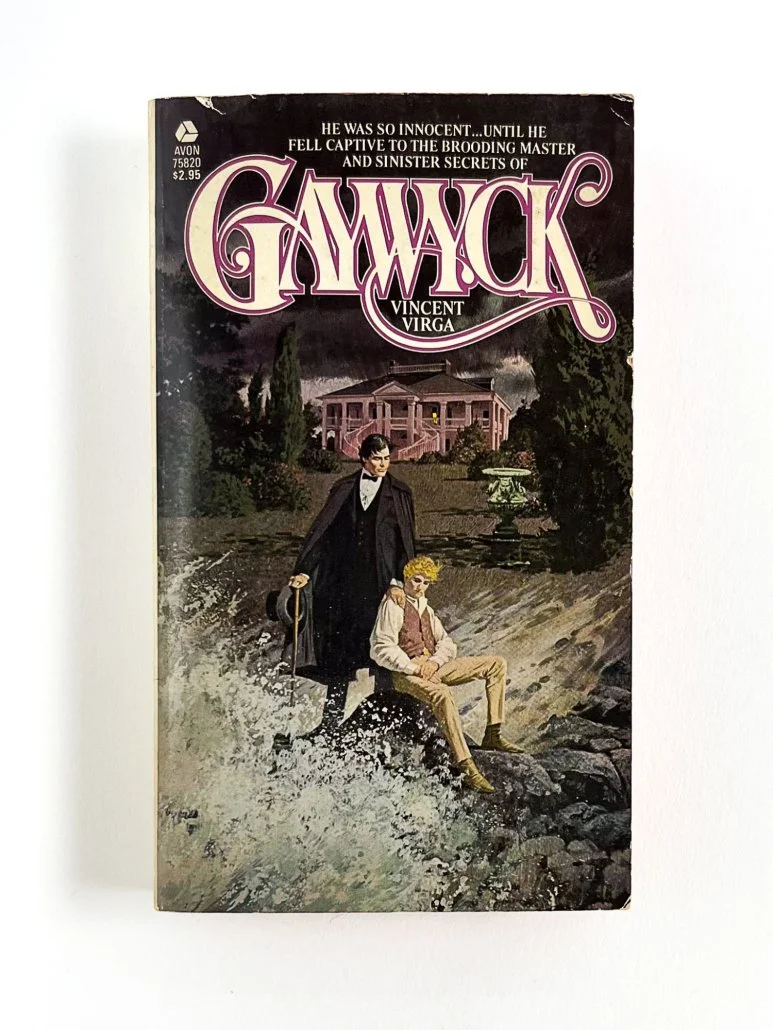
Gothic novels have always been queer. Many critics consider The Castle of Otranto as an allegorical means for Walpole to write about his homosexuality, and sexual and gender transgression run through the genre like ‘Blackpool’ through a stick of rock. However, Gaywyck was the first explicitly gay published Gothic romance, taking the classic scary house and brooding master, but replacing the beleagured young lady with an innocent young man (innocent when the book starts, anyway). Florid prose, bananapants plotting, and eyebrow-raising family secrets abound. Regrettably hard to get hold of, no idea why it’s not in e.[EDIT: I have just seen that a new edition is coming in e! Kindle only but at least it's available.]
***
In All Of Us Murderers, I took elements of all my favourite Gothic periods to create a queer romance set in a scary house on Dartmoor at the world’s worst family reunion. Family secrets, sexual transgression, deeply warped people, inexplicable supernatural happenings, spiders. (Sorry about those.)
I even made the family’s Evil Ancestor a Gothic novelist himself, based on William Beckford, who wrote a Gothic novel called Vathek (the Orientalist Gothic). Beckford was a spectacularly terrible human being on multiple axes: child molester, slaver and plantation owner, gross hypocrite who wrote mawkishly about animal rights and the liberty of the individual, awful friend, serial adulterer, wastrel on an unimaginable scale. It's hard to believe he wasn't trying to win some sort of bet, possibly with Satan. Plus almost all the expensive buildings on which he spent his fortune fell down right away, and while I’m on the subject, Vathek is lousy too.
I had immense fun with my beloved genre, which the artist Marcela Bolívar channelled directly into the cover (see the sidebar). I hope you enjoy it!
***
Let me here note that any expert on the Gothic could come up with a dozen more classifications and a completely different selection of books; this is my interpretation and doesn't claim to be definitive! It also doesn't even touch on the Americas-based explosion since the 1980s, with Toni Morrison's Beloved and authors like Anne Rice and Silvia Moreno-Garcia and Tananarive Due and Nalo Hopkinson and many more, let alone the current boom in East Asian Gothic. What I'm saying is, whatever you want, as long as it's perverse and scary and there's a sinister master, house or family someone needs to get away from, there's a Gothic novel for it.
All Of Us Murderers is out on 1 October in the UK, 7th October in the US.
You can preorder a signed and dedicated hard copy here!